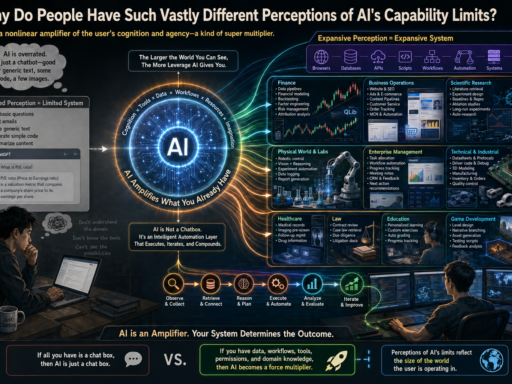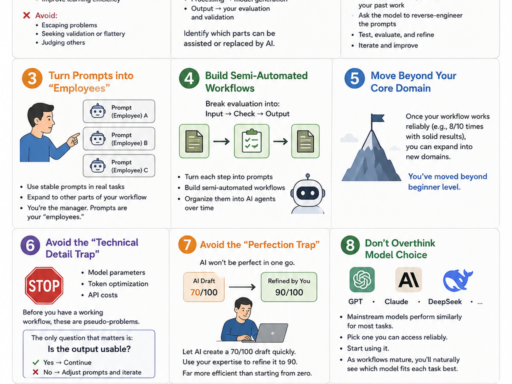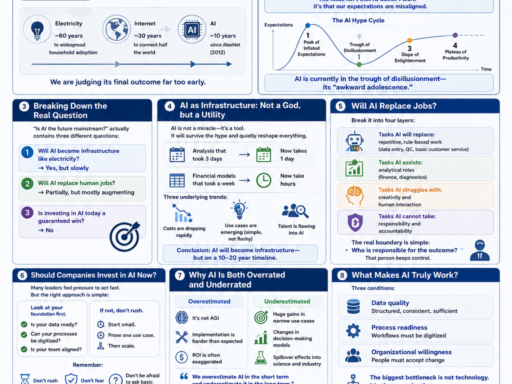
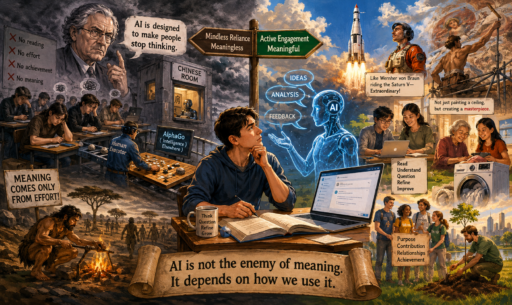
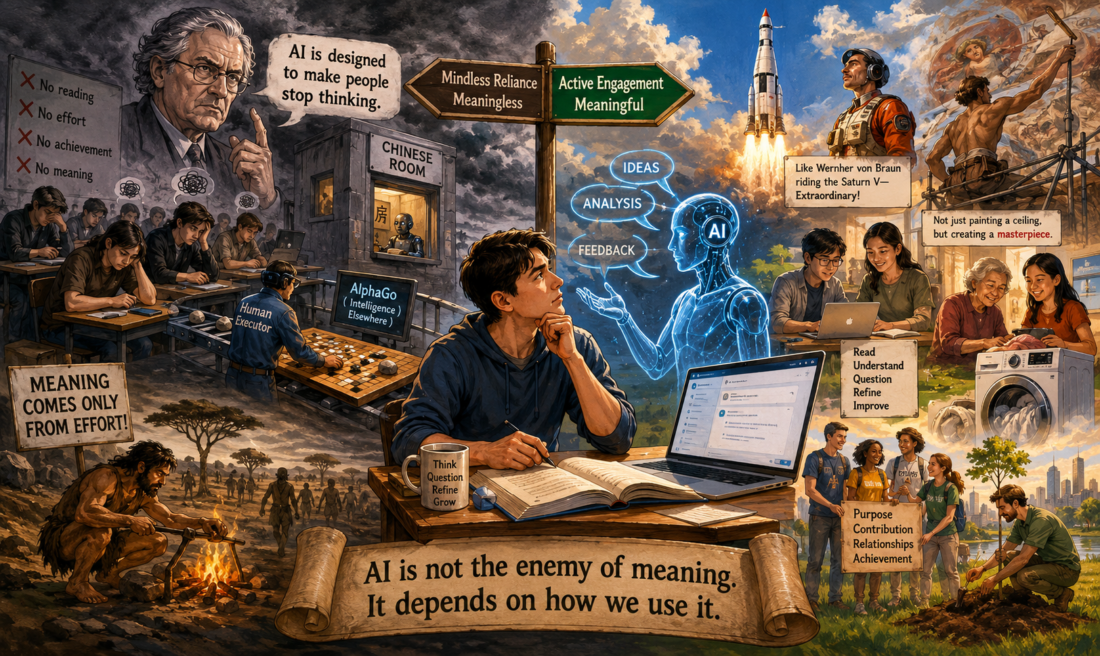

The answer is no. When people turn to AI for help, the process itself involves higher-level cognitive functions. Reading, understanding, questioning, and refining AI-generated responses all require active thinking. When used properly, AI can even help improve one’s thinking skills.
Intuitively, you can simply ask a large language model, “How can I improve my thinking ability?” and see what it says.
Some responses and comments on this topic take an extreme stance, claiming that people who constantly rely on AI or ask questions online already lack thinking ability. This judgment is questionable.
In this area, we see some professors engaging in rather awkward discussions on AI ethics.
Sven Nyholm, a professor of AI ethics at Ludwig Maximilian University of Munich, argues that as AI becomes increasingly capable of performing complex tasks that once required significant human effort and creativity, it may save time but ultimately “undermine people’s sense of achievement,” which is closely tied to a sense of meaning in life. He suggests that the real issue is not what AI produces, but what aspects of ourselves we stop developing.
Nyholm observes that since AI can summarize texts in seconds, many students no longer bother to read difficult materials. He told Big Think that AI is designed to make people stop thinking. If you are unwilling to think or develop critical reasoning skills, and instead outsource them to a mindless AI system, then what is the point of studying philosophy in university? He admits that in such moments, both students’ learning and his own role as a teacher seem less meaningful.
However, even before large language models existed, we had already seen “anti-thinking” behaviors such as paper mills, template essays, and copying content from the internet.
Nyholm attempts to define “meaning.” He argues that if meaning is purely subjective, then anything meaningful to an individual would count as meaningful, ending the discussion. To continue the conversation, meaning must be connected to standards or practices that can be measured and compared. Some actions, creations, or forms of interaction can reasonably be considered more meaningful than others. Meaning is not “a single achievement that settles everything once and for all”—it exists across different levels and moments.
At this point, some readers might find this amusing: if you could solve all problems once and for all, wouldn’t that also resolve the question of meaning?
Seemingly unaware of such philosophical self-contradictions, Nyholm continues. He claims that a meaningful life is shaped by doing good, pursuing truth, and appreciating beauty. Meaning can also be explored by developing the better aspects of human nature while dealing with its less appealing sides with dignity and care. Another view is that meaning comes from being part of something larger than oneself—living beyond personal interests, contributing to others’ well-being, building deep relationships, and participating in communities. These elements often revolve around purpose, contribution, and achievement.
Nyholm’s point is ultimately this: if AI takes over meaningful activities and leaves humans with only meaningless ones, then AI is a threat to meaning. Conversely, if AI takes over meaningless tasks and leaves meaningful ones to us, then AI becomes a catalyst for meaning.
In his book AI Ethics: A Philosophical Introduction, he highlights the example of a DeepMind employee who physically placed stones on the board for AlphaGo. He presents this role as a dark prediction of humanity’s future—where people perform tasks while intelligence resides elsewhere. He asks whether such work can provide genuine pride and suggests that since work is central to meaning for many people, this future threatens meaningful human activity.
But this interpretation is questionable. The person in question is Huang Shijie, an amateur Go player ranked 6-dan, a core engineer, and one of the lead designers of AlphaGo. This is not a case of a “subordinate human executing meaningless tasks for a superior intelligence.” It is more like Wernher von Braun riding the Saturn V rocket to the moon—an experience that likely felt extraordinary. Either Nyholm ignores this context or is unaware of it.
If Nyholm could not understand painting, he might describe Michelangelo’s work on the Sistine Chapel ceiling as merely “standing on scaffolding, painting a ceiling day after day”—reducing a masterpiece to repetitive labor devoid of meaning.
He further introduces the idea of an “achievement gap.” Every time we rely on AI to complete tasks we could have done ourselves—tasks involving writing, composing, or decision-making—we risk diminishing our contribution. As our role shrinks, the results become harder to regard as achievements we can truly be proud of.
Because AI frequently produces useful results, Nyholm invokes the “Chinese Room” argument, suggesting that neither AI nor humans involved necessarily understand what they are doing. This attempt to undermine the value of useful outcomes feels unconvincing. By this logic, even medieval believers claiming to act under “God’s grand plan” would lack meaning.
Nyholm concludes by emphasizing that the meaning of achievement lies largely in the process. True achievement requires effort, sacrifice, and skill. One must apply their own abilities and demonstrate excellence, which comes from time, practice, and sustained dedication.
Finally, he reiterates familiar concerns: AI may weaken our ability to break down complex problems, test hypotheses, and think precisely, pushing us toward impulsiveness, shorter attention spans, and constant distraction. Ironically, it seems he has not invested enough effort into this topic himself, resulting in a rather mediocre book—yet he appears to derive a strong sense of meaning from it.
In the 20th century, critics worried that household automation would strip life of meaning. Their logic was similar:
Housework once required significant effort and skill, reflecting responsibility and competence.
Technologies like washing machines eliminated that effort.
Without effort, there is no achievement, and therefore no meaning.
By this reasoning, perhaps these critics should abandon modern life altogether and return to primitive conditions in East Africa in search of “authentic human practices.
reference
https://bigthink.com/philosophy/the-hidden-cost-of-letting-ai-make-your-life-easier/