
With AI becoming increasingly powerful, many people have started asking:
“Do we still need to memorize knowledge when AI can answer almost anything?”
At first glance, it seems reasonable.
Why spend hours memorizing facts, formulas, historical dates, or definitions when AI can instantly provide answers?
But the reality is more complicated.
The AI era does not mean humans need less knowledge.
It means we need different kinds of knowledge.
Some information no longer needs to be memorized.
But some knowledge has become more important than ever.
What Knowledge No Longer Needs Heavy Memorization?
In traditional education, many students spent large amounts of time memorizing information mainly for exams.
Examples include:
- Temporary facts
- Exact wording
- Isolated details
- Information that only exists to answer test questions
In the past, closed-book exams rewarded students who could remember large amounts of information.
But education systems are gradually changing.
New assessment methods increasingly focus on:
- Application
- Problem-solving
- Analysis
- Exploration
- Real-world situations
The goal is shifting from:
“Can you remember the answer?”
to:
“Can you use knowledge to solve a problem?”
This means pure memorization is becoming less valuable.
The Future of Exams Is Not About Memory Alone
Modern education trends are moving toward testing:
- How students apply knowledge
- How they analyze situations
- How they combine different concepts
- How they solve unfamiliar problems
The ability to simply repeat information is becoming less important.
Students do not necessarily need to memorize every detail perfectly.
Instead, they should focus on understanding:
- Why something works
- How concepts connect
- When knowledge should be applied
The goal is not storing answers.
The goal is building thinking ability.
What Knowledge Should Still Be Memorized?
Although some information can now be retrieved instantly, certain knowledge still needs to become part of your memory.
These include:
1. Fundamental Concepts
Basic concepts form the foundation of understanding.
For example:
- Mathematical principles
- Scientific concepts
- Language structures
- Core professional knowledge
Without these foundations, it becomes difficult to evaluate whether AI-generated answers are correct.
2. Essential Formulas and Methods
In fields like:
- Mathematics
- Engineering
- Programming
- Science
basic formulas and methods should become automatic.
You should not need to ask AI every time you need a fundamental tool.
Knowledge that becomes automatic allows faster thinking.
3. Important Facts and Frameworks
Not every detail needs memorization.
But important frameworks do.
Examples:
- Historical patterns
- Industry principles
- Professional standards
- Logical structures
These become the mental framework you use to understand new information.
The Biggest Problem With AI: Hallucinations
One of the biggest weaknesses of current AI systems is:
AI hallucination.
AI can generate answers that sound convincing but are incorrect.
Third-party evaluations have repeatedly shown that major AI models still produce factual errors, especially when dealing with:
- Rare topics
- Specialized knowledge
- Unclear situations
- Complex professional questions
This creates an important problem:
If you have no background knowledge, how do you know when AI is wrong?
The answer:
You cannot.
Knowledge Protects You From AI Mistakes
Your own knowledge works like a filter.
The more you understand a subject, the easier it becomes to detect:
- Incorrect information
- Missing details
- Bad assumptions
- Logical mistakes
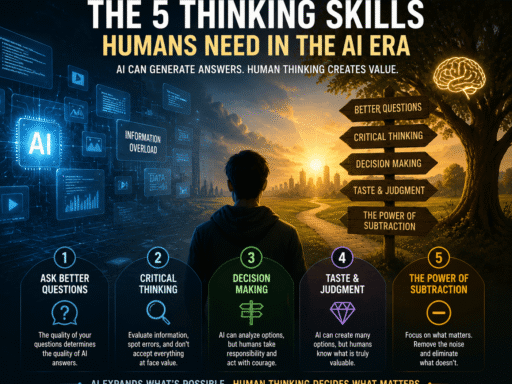
AI should not replace your ability to think.
It should strengthen it.
A person with strong knowledge can use AI as a powerful assistant.
A person without knowledge may simply accept whatever AI says.
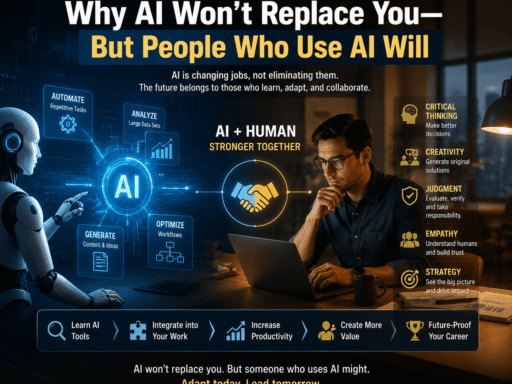
AI Is a Tool, Not Your Replacement
The biggest mistake in the AI era is believing:
“Since AI knows everything, I don’t need to know anything.”
This creates dependency.
AI can:
- Summarize information
- Compare ideas
- Generate examples
- Translate languages
- Create reports
- Help with research
But AI cannot replace your internal understanding.
Your brain still needs a knowledge foundation.
Why Memorization Builds Better Thinking
Many people misunderstand memorization.
They think memorization means:
Repeating information mechanically.
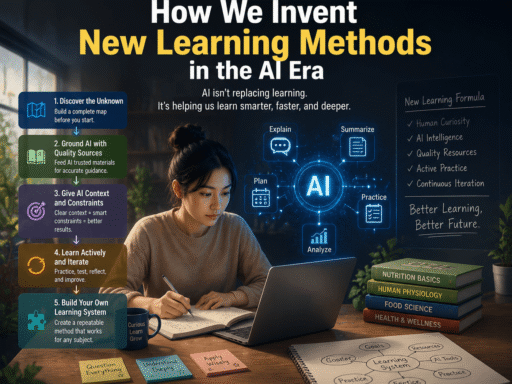
But effective memorization is actually a process of:
- Repeated exposure
- Active recall
- Practical use
- Internalization
Over time, knowledge becomes part of your thinking system.
You no longer consciously search for it.
You simply use it.
The Difference Between Knowing and Looking Up
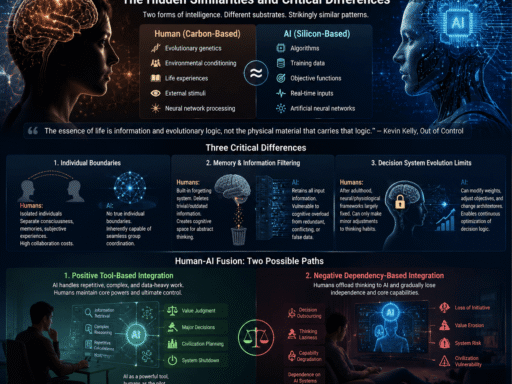
Imagine two engineers.
Engineer A:
- Understands fundamental principles
- Has years of experience
- Uses AI to accelerate work
Engineer B:
- Relies entirely on AI
- Has limited internal knowledge
- Cannot evaluate AI suggestions
Both may use the same AI tool.
But their results will be completely different.
The difference is not the AI.
The difference is the human using it.
The Automation Paradox: The More AI Does, The More Humans Need Understanding
There is an interesting concept called the automation paradox.
The more automated a system becomes, the more humans move from doing tasks to supervising them.
But supervision requires understanding.
You cannot properly supervise something you do not understand.
If people stop practicing skills completely and only watch AI perform them, their ability will gradually decline.
Eventually, they become responsible for decisions they no longer have the ability to evaluate.
What Should We Memorize in the AI Era?
The answer is not:
“Memorize everything.”
The answer is:
“Memorize strategically.”
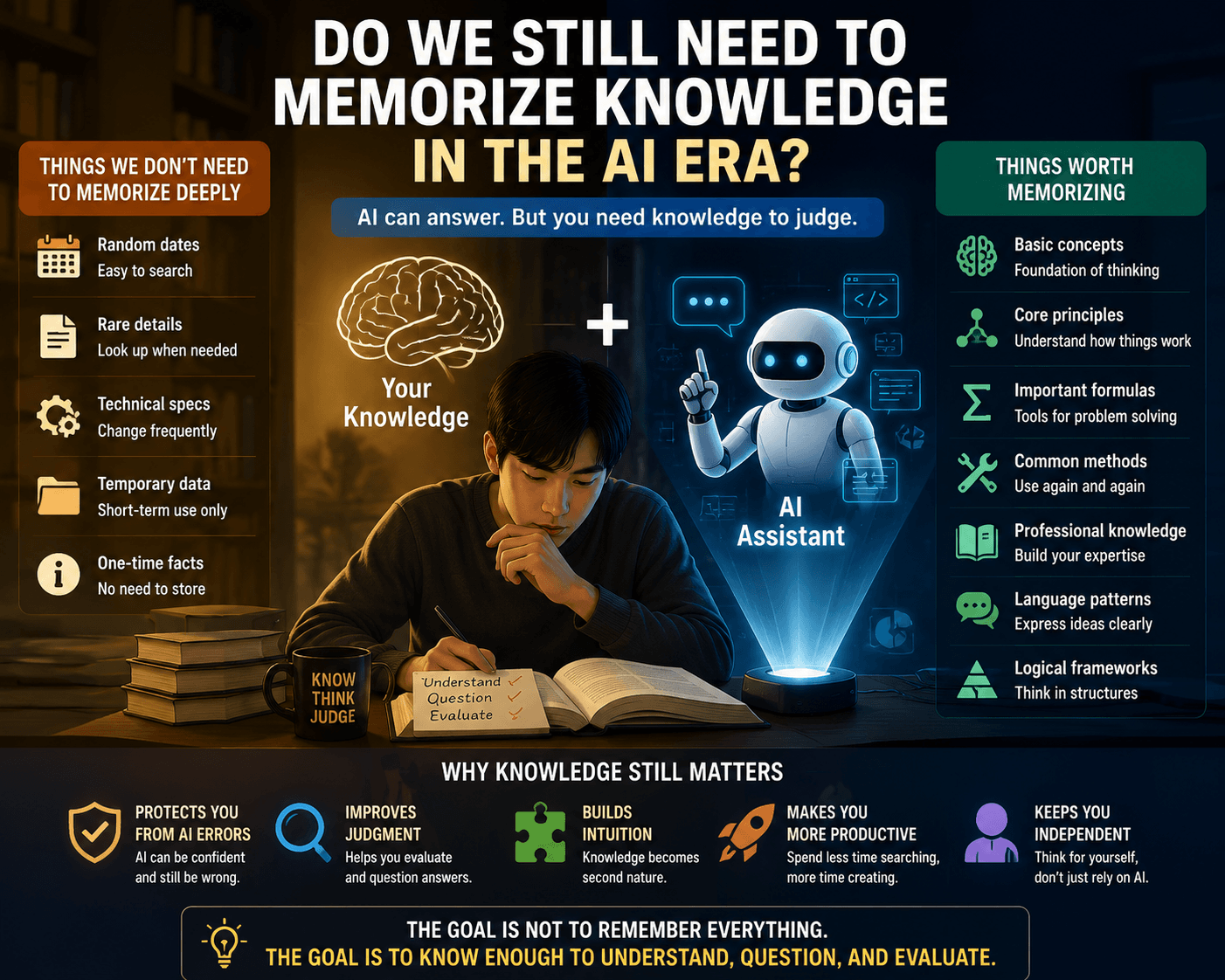
Things You Can Memorize Less
You do not need to spend excessive effort memorizing:
- Rare information
- Easily searchable facts
- Temporary data
- Complex numbers
- One-time information
AI can handle these tasks efficiently.
Things You Should Still Memorize
You should remember:
- Fundamental concepts
- Core knowledge frameworks
- Common methods
- Important facts
- Essential formulas
- Language patterns
- Professional principles
These are not just information.
They are the foundation of your thinking.
The Real Purpose of Memorization Has Changed
In the past:
We memorized because we could not access information during exams.
Today:
We memorize because we need the ability to think independently while AI provides information instantly.
The goal is no longer:
“I know everything without help.”
The goal is:
“I know enough to judge, question, and improve what AI gives me.”
Final Thoughts: AI Makes Knowledge More Valuable, Not Less
AI has changed how humans access information.
Many details that once required memorization can now be retrieved instantly.
But this does not mean the human brain can become empty.
Without internal knowledge:
- AI answers become harder to evaluate
- Mistakes become easier to accept
- Critical thinking becomes weaker
The future belongs not to people who memorize everything.
It belongs to people who know:
What to remember, what to understand, and what to delegate to AI.
AI can expand our knowledge.
But humans still need the foundation to use that knowledge wisely.